
What type of insulation is best for hot tubs in 2026?
How well a hot tub has been insulated is one of the biggest factors in how much it costs to run.
You’ll certainly pay a bit more upfront for a well-insulated home spa, but the boost in energy efficiency is bound to bring the lifetime cost down once you take running costs into account.
So, if insulation is so important, then what’s the best insulation for hot tubs?
Here’s absolutely everything hot tub owners need to know to pick a home spa that won’t give them a shock whenever they look at their smart meter.
Hot tub insulation types
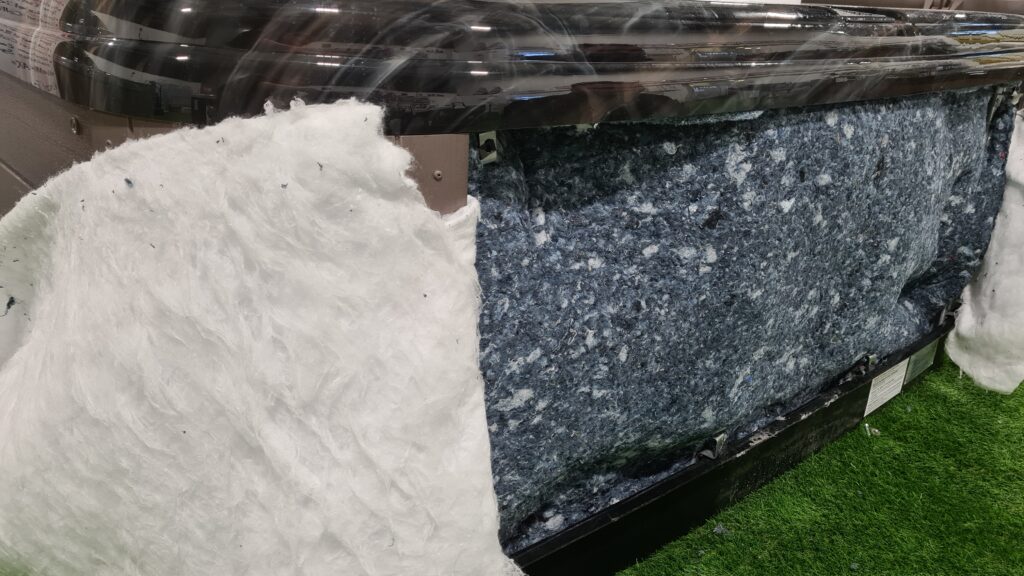
Not all hot tub insulation is created equal. Here’s a rundown of each type of insulation you’ll find on the home spas on the market – as well as our advice on which is the best hot tub insulation.
No insulation
Some hot tubs don’t come with any insulation at all.
All inflatable hot tubs fall into this camp. As a result, they cost a lot to run and might need to be brought up to temperature before you can use them (especially in colder months).
One of the reasons we recommend that you never buy a hot tub sight unseen from an online store is that some permanent hot tubs made abroad come with no insulation at all between the shell and exterior.
A trick these unscrupulous hot tub manufacturers will often use is calling a hot tub “insulated” because it comes with a cover filled with a thin layer of insulation. While these spas are technically insulated, they’re not really going to retain any heat at all.
These hot tubs cost arm and a leg to run and take an age to heat up. Plus, the components will have to work harder to maintain the same temperature, shortening their life span.
Plus, you can bet your bottom dollar that any hot tub brands willing to sell spas without any insulation will be cutting plenty of other corners, too.
Be sure to follow the tips in our hot tub guying guide to make sure you never buy a home spa that isn’t insulated, as it will cost you a pretty penny in electricity bills to run.
Thermal wrap
Some hot tubs at the bottom end of market will be insulated by nothing more than a thermal blanket – reflective material that’s wrapped around the shell to reflect some heat back into the tub.
This kind of insulation is only slightly more effective than having no insulation at all and really isn’t suitable for hot tubs. It’s certainly no replacement for foam insulation, as it provides a fraction of the heat retention.
However, it’s worth noting that thermal wraps are fine for the swim chamber of swim spas, which don’t need to reach as high temperatures as a hot tub. So, this kind of insulation isn’t as big of a red flag if you’re shopping for a swim spa as it is for a hot tub.
Partial foam insulation
Most hot tubs are partially insulated by a layer of foam insulation that’s sprayed to their shell. This helps a home spa retain heat, but also provides it with structural support that prevents its shell from cracking and warping over time.
Full foam insulation
The most energy-efficient home spas are fully insulated with high-quality foam.
A fully insulated hot tub will only cost a lot less to run than a poorly insulated equivalent. It will also be less prone to repairs, as the insulation holds its pipes in place, making leaks less likely. So, going for a ‘fully-foamed’ hot tub could save you a pretty penny in repair bills as well as energy costs.
The only part of the most efficient spas on the market that isn’t insulated is the equipment bay, as the pumps and control box needs to be ventilated and easily accessible for service. But bar from the equipment panel, the more insulated a hot tub – and the higher quality the insulation – the better.
The hot tub cover
Hot tubs lose around 60% of their heat through the surface of their water. So, even a hot tub with the most insulated cabinet possible won’t retain much heat if its cover isn’t up to scratch as well.
Make sure to go for hot tub with a cover filled with high-density polyurethane foam that’s at least four inches thick at the centre and tapered to the edges to ensure rain runs straight off.
A good-quality cover folds in the centre with a ‘continuous heat seal’ along the underside of this fold to create an airtight seal that drastically reduces heat loss.
You can quickly find out how effective a hot tub cover is by placing your hand on it in the showroom. If its surface is room temperature, that means it’s trapping heat as efficiently as possible.
We also strongly recommend you go for a hot tub with a cover with lockable clips. These will ensure an airtight seal, stop the cover from getting blown off in the wind, and prevent unsupervised little ones from being able to access your home spa.
How do I add insulation to my hot tub?
Not happy with how much your hot tub is running up your electricity bill – or regretting going for a home spa without insulation after reading this guide?
You can add insulation to your existing hot tub to prevent heat loss and make it more energy efficient if you’re a dab hand at DIY.
However, we’d strongly recommend you don’t buy a home spa with no insulation and attempt to insulate it yourself. The most competent job you’ll be able to manage is going to pale in comparison to what any half-decent hot tub manufacturer will send off the assembly line as standard.
And while you might be able to wrap some thermal blankets around your hot tub’s cabinet or apply some spray foam to its shell, that’s not going to have anywhere near as big of an impact on your energy bill as replacing a poorly insulated model with a fully-foamed upgrade.
Plus, adding insulation of any kind to your hot tub yourself is likely to void its warranty, which could leave you out of pocket if things go south.
Conclusion
We strongly recommend you only ever consider buying a partially- or fully-insulated hot tub.
And if your budget stretches to a spa that’s been fully insulated with multiple layers of high-density foam, then we recommend you swallow the extra upfront cost and enjoy far lower running costs throughout your hot tub’s whole lifespan.
An easy way to narrow down your search to just partially- and fully-insulated hot tubs is to stick with models made by the hot tub companies in our list of LA Pool & Spas Hot Tubs.